Applying the Deming Management Method in Gillespie County Small Businesses
Applying the Deming Management Method in Gillespie County Small Businesses
We all know that our small and micro businesses drive our economy and define our community character. 2025 was a tough year for our small businesses and I often hear from chamber members: how can we improve quality, reduce waste, and grow sustainably without adding unnecessary complexity?
Answers can be found in the Deming Management Method.
Developed by Dr. W. Edwards Deming, the method centers on continuous improvement, systems thinking, and data-driven decision-making. While Deming’s ideas helped rebuild post-war Japanese industry and later influenced major global corporations, they are equally powerful for small-town businesses — especially those built on relationships and reputation.
Start With Systems, Not Blame
One of Deming’s core principles is that most problems are caused by systems, not people. For a retailer, recurring inventory shortages may not be a staffing issue but a flawed ordering process. For a restaurant, inconsistent service may stem from unclear training standards rather than employee motivation.
Instead of asking, “Who made the mistake?” Deming encourages leaders to ask, “What in the process allowed this to happen?”
Small businesses can begin by mapping key processes — how an order is taken, how a customer complaint is handled, how invoices are processed. When steps are clear and consistent, errors decrease and customer satisfaction improves.
Use the PDSA Cycle
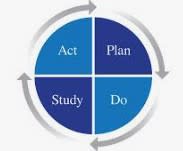
Deming popularized the Plan–Do–Study–Act (PDSA) cycle for continuous improvement:
- Plan: Identify a problem and propose a change.
- Do: Test the change on a small scale.
- Study: Analyze results using data.
- Act: Adopt, adjust, or abandon the change.
A Fredericksburg boutique might test extended Saturday hours during peak tourism season. A local HVAC company could trial a new scheduling system for two weeks. Rather than guessing what works, businesses gather data — sales totals, service times, customer feedback — and make informed decisions.
The key is small experiments, not sweeping overhauls.
Reduce Variation
Deming emphasized reducing variation to improve quality. In practical terms, this means delivering consistent customer experience.
For a winery along U.S. 290, variation might mean inconsistent tasting room service. For a construction firm, it might mean project timelines that fluctuate widely. Standardizing procedures — checklists, training scripts, clear timelines — reduces surprises and strengthens trust.
Consistency builds reputation, and in a relationship-driven market like Gillespie County, reputation is everything.
Invest in Training and Leadership
Deming rejected management by fear or quotas alone. He believed leadership should focus on coaching, removing barriers, and helping employees succeed.
For small businesses, this may mean cross-training staff, so operations don’t stall during busy tourist seasons. It may mean holding short weekly team meetings to review performance metrics and invite suggestions for improvement.
When employees understand the system and see ownership is invested in improving it, productivity rises naturally.
Think Long Term
Perhaps most importantly, Deming urged businesses to focus on long-term sustainability rather than short-term gains. Cutting corners to save money today often damages reputation tomorrow.
In a community like Fredericksburg — where word of mouth travels quickly and customers return year after year — long-term thinking is not just idealistic, it’s practical.
Small businesses don’t need complex corporate frameworks to thrive. By focusing on process improvement, consistent quality, employee engagement, and thoughtful experimentation, Gillespie County entrepreneurs can apply Deming’s principles in ways that fit their scale and culture.
Continuous improvement isn’t about dramatic change. It’s about steady, intentional progress — one small system at a time.